


By Plexus Energy Ltd | September 2026
Kenya’s commercial and industrial solar market is entering a new phase.
In the Kenya Gazette published on 18 September 2026, the Energy and Petroleum Regulatory Authority (EPRA) introduced important amendments affecting electricity tariffs, net metering, e-mobility and the treatment of electricity exported into the Kenya Power network.
For businesses considering solar PV, battery energy storage systems (BESS) or hybrid power solutions, these changes make one thing increasingly important:
It is no longer enough to ask how much solar a facility can install. Businesses now need to ask where every unit of solar energy generated will go.
For developers, EPC contractors and energy consumers, this has direct implications for system sizing, zero-export controls, battery storage and project returns.
The Gazette defines a net-metering consumer as a customer who receives electricity from a licensed supplier while also generating renewable energy on the customer’s side of the meter for self-consumption and export.
The installed renewable generation capacity under this definition must not exceed 1 MW.
Under the tariff provisions, electricity exported to the distribution network receives a credit equivalent to 50% of the electrical energy exported.
For example, where an eligible customer exports 100 kWh to the network, the billing credit is equivalent to 50 kWh.
Importantly, pass-through costs, taxes and levies are calculated on the total electricity supplied by Kenya Power before the export credit is applied.
This makes the economics of solar self-consumption particularly important.
For most commercial and industrial facilities, the greatest financial value from solar is achieved when the electricity generated is consumed directly at the facility.
Consider three possible destinations for a solar-generated kilowatt-hour:
Solar → Facility Load
The business immediately avoids purchasing that unit of energy from the grid.
Solar → Battery → Facility Load Later
Excess daytime energy can be stored and used later when solar production falls, potentially reducing evening or peak grid consumption while also providing resilience.
Solar → Grid
Where an approved net-metering arrangement exists, exported energy receives the applicable energy credit under the new tariff framework.
This means that good solar design should increasingly focus on maximising useful self-consumption, rather than simply installing the largest PV system that can physically fit on the roof or available land.
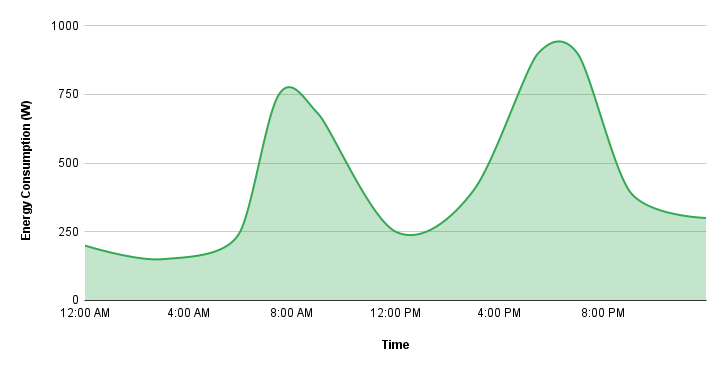
Historically, solar systems were sometimes sized largely from a customer’s monthly electricity bill.
But a monthly bill does not show what is happening inside a facility throughout the day.
A factory might consume 100,000 kWh per month but have a completely different solar profile from a hotel, school, hospital or office building consuming the same amount.
The critical questions include:
At Plexus Energy, detailed load analysis and data logging are therefore becoming increasingly important in the design of commercial and industrial solar systems.
The objective is not simply to maximise installed solar capacity.
The objective is to maximise the financial value of every kilowatt-hour generated.
One of the most significant provisions in the Gazette is the introduction of the term “dumping.”
EPRA defines dumping as the unauthorized injection of electricity from a consumer’s generating system into the electricity network without approval or without a net-metering agreement.
The Gazette further provides that electricity injected into the network without prior written authorization may be measured and charged at the applicable base tariff.
Additional action may also be taken where unauthorized export results in injury or equipment damage.
This makes export control an increasingly important consideration in grid-connected solar installations.
Where a solar installation is not operating under an approved net-metering arrangement, the system may need to prevent electricity from flowing back into the utility network.
This is normally achieved through a zero-export or export-limitation control system.
Such systems monitor power flow at the point where the customer’s electrical installation connects to the grid.
If solar production begins exceeding the facility’s consumption, the controller instructs the inverter or energy management system to reduce output so that power is not exported.
A properly engineered zero-export system may include:
Correct positioning of meters and CTs, proper configuration and commissioning are essential.
For commercial solar customers, export control should therefore be considered at the design and quotation stage, rather than after the solar plant has already been installed.
Battery Energy Storage Systems are increasingly becoming more than backup-power equipment.
They can form part of a wider energy optimisation strategy.
Consider a commercial facility where solar generation exceeds the facility’s load between 11:00 a.m. and 2:00 p.m.
Without storage, that excess electricity may have to be curtailed through a zero-export controller or exported under an approved net-metering arrangement.
With an appropriately sized BESS, some of that surplus electricity can instead be stored and used later.
The energy flow becomes:
Solar PV → Facility Loads → Battery Storage → Evening or Peak Loads
This can increase the amount of solar energy actually consumed by the business.
But bigger batteries do not automatically produce better returns.
Correct BESS sizing should consider:
The objective should therefore not be to install the biggest battery available.
It should be to install the right battery for the customer’s energy profile.

The new framework also has implications for how businesses evaluate solar investment returns.
A solar financial model should increasingly distinguish between:
1. Solar energy consumed directly
This normally produces the strongest economic benefit because it directly offsets electricity that would otherwise have been purchased from the grid.
2. Solar energy stored and consumed later
The value will depend on battery cost, efficiency, cycling, electricity tariffs and the operational requirements of the facility.
3. Solar electricity exported
The Gazette provides for a credit equivalent to 50% of exported electrical energy under the applicable net-metering arrangement.
These different energy flows do not necessarily produce the same financial benefit.
A credible solar proposal should therefore show the customer how much solar electricity will be:
Generated → Self-consumed → Stored → Exported → Curtailed
This produces a far more realistic picture of project savings and payback.
The Gazette also amends the electricity tariff applicable to e-mobility customers.
Electricity supplied to qualifying e-mobility customers at 240V or 415V is charged at:
KES 16.00/kWh during the applicable normal tariff period
and
KES 8.00/kWh during off-peak hours.
This creates interesting opportunities for the integration of:
Solar PV + Battery Storage + EV Charging + Smart Energy Management
particularly for electric vehicle fleets, electric motorcycles, logistics operators and commercial charging facilities.
Charging vehicles during periods of low electricity cost while using solar during daytime operations could become an important part of fleet-energy optimisation.
Businesses planning a new solar investment should consider several questions before selecting system capacity.
Rather than simply asking:
“How many solar panels can we install?”
the better questions are:
How much power do we consume during solar production hours?
What happens to surplus generation?
Do we require zero-export control?
Would battery storage increase self-consumption?
Could our facility benefit from net metering?
What combination of solar and battery storage gives us the best return?
These questions should be answered before equipment selection.
The Kenyan solar industry is progressively moving from simple rooftop installations toward more sophisticated energy systems.
The conversation is changing from:
Solar panels and inverters
to:
Solar + Storage + Controls + Monitoring + Energy Management.
For customers, this is a positive development.
Properly designed systems can provide not only lower electricity costs, but also greater energy resilience, improved power quality, better visibility of energy consumption and greater control over how electricity is generated and consumed.
For Plexus Energy, our approach is increasingly centred around a simple principle:
Generate the right amount of energy, at the right time, store it where it makes economic sense, and ensure every kilowatt-hour delivers maximum value.

If your organisation is considering commercial solar, battery energy storage, hybrid power systems, energy audits, zero-export solutions or net-metering readiness, Plexus Energy can assess your electricity consumption and develop an appropriately sized solution.
Our team provides complete services covering:
Energy assessment → System design → Financial modelling → Supply → Installation → Commissioning → Monitoring → Operations & Maintenance.


