
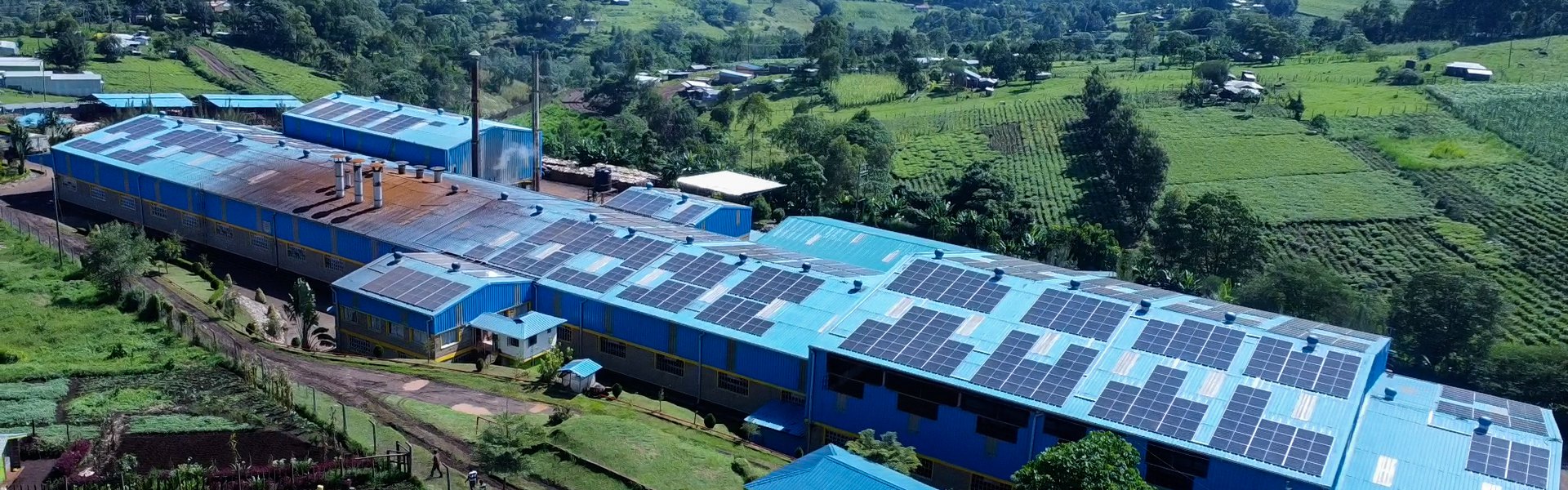

Kericho County is the heartbeat of Kenya’s tea industry and an important hub for coffee processing as well. Every day, tea factories and coffee pulping stations across the lush highlands rely heavily on electricity to power withering fans, dryers, pulpers, grading machines, cold rooms, and office operations. However, unreliable grid power, rising electricity costs, and frequent outages have become a serious challenge for agri-processing plants. This is where off-grid solar energy is stepping in as a game changer — suluhisho la uhakika for sustainable agro-industrial growth.
Tea and coffee processing are energy-intensive operations. In Kericho, factories often experience power interruptions during peak production seasons, especially when weather conditions affect the national grid. These outages can result in delayed processing, compromised quality, and financial losses.
Many factories rely on diesel generators as backup power. While generators provide short-term relief, the long-term costs are high. Fuel prices fluctuate, maintenance is expensive, and emissions negatively impact the environment. In an era where global buyers increasingly demand sustainable and traceable production, diesel dependency is no longer viable.
As factory managers often say, “Umeme ikipotea, kazi inasimama.” When power goes off, operations come to a halt.
Kericho enjoys consistent solar irradiation throughout the year, making it ideal for off-grid solar solutions. Modern solar systems are no longer limited to small-scale lighting; they can now power heavy industrial machinery when designed correctly.
Off-grid solar systems combine solar panels, high-capacity lithium batteries, and smart inverters to deliver reliable power 24/7. For tea and coffee processing plants, this means uninterrupted operations during critical production hours, even when the grid is down or unavailable.
Unlike grid-tied systems, off-grid solar plants operate independently, offering energy security and full control over power usage. Hakuna stima? Hakuna shida. The factory continues running smoothly.

One of the biggest advantages of off-grid solar energy is cost predictability. After the initial installation, operational costs drop significantly. There are no monthly electricity bills and minimal maintenance expenses.
Tea and coffee processors can redirect funds previously spent on diesel and grid electricity towards improving processing equipment, farmer payments, or staff welfare. Over time, solar systems pay for themselves, typically within 3 to 5 years, depending on system size and energy demand.
Additionally, many agri-processors can benefit from carbon credits and green financing options, further reducing the overall investment cost. For cooperatives, this translates into higher returns for farmers — faida zaidi kwa mkulima.
Consistency is key in tea and coffee processing. Power fluctuations can affect temperature control during drying, fermentation, and storage, leading to inconsistent quality. Off-grid solar systems provide stable voltage and frequency, protecting sensitive machinery and ensuring uniform processing conditions.
With reliable energy, factories can maintain optimal processing timelines, reducing spoilage and improving overall product quality. This strengthens Kericho’s reputation as a source of premium tea and coffee in international markets.
Global buyers and certification bodies such as Rainforest Alliance and Fairtrade increasingly prioritize sustainability. Off-grid solar energy significantly reduces carbon emissions, helping processing plants meet Environmental, Social, and Governance (ESG) standards.
Switching to solar demonstrates environmental responsibility and strengthens brand positioning in export markets. It also aligns with Kenya’s national goals on renewable energy adoption and climate action. Kilimo endelevu si chaguo tena — ni lazima.
Beyond factory gates, off-grid solar energy contributes to rural development. Local technicians are trained to install and maintain solar systems, creating skilled jobs within the community. Reliable power also supports nearby businesses, housing units, and social infrastructure when systems are designed with expansion in mind.
For cooperative-owned factories, solar energy symbolizes self-reliance and resilience. Farmers gain confidence knowing their produce will be processed efficiently regardless of grid challenges.
As energy demands continue to grow, tea and coffee processing plants in Kericho must adopt smarter, more resilient power solutions. Off-grid solar energy is no longer a future concept — it is a practical, proven solution already transforming agri-industries across Kenya.
Investing in off-grid solar is not just about reducing costs; it is about securing production, improving quality, supporting farmers, and protecting the environment. For Kericho’s tea and coffee sector, solar energy is the power behind sustainable growth.
Kwa mashamba hadi viwandani, jua linaangaza njia ya maendeleo.


